
Introduction
I recently finished reading the book Born to Run by Christopher McDougall and I thought it was a fantastic book! The only time you’ll want to put it down is when you decide to go for a run.
One of the topics that the book covered is barefoot running. There were a few characters in the story including the Tarahumara tribe that support barefoot running. They don’t wear modern running shoes but they are still some of the fastest humans on the planet. McDougall even gave a few points against wearing running shoes. However, some people tried barefoot running and it did not go well. They ended up injured and frustrated. You are probablly wondering, “Should I run barefoot?”
I don’t think that you should throw away your running shoes and go all in on barefoot running. If you throw away your running shoes and start going barefoot for all your runs then you will probably end up injured. Here are a few ways to get the benefits of barefoot running but with a lower risk of getting injured.
Barefoot Training
- Strength Training
If you are a runner then you should be strength training. Most people know about the benefits of running with stronger quads, hamstrings, and calves. However, people don’t relaize that strength training can strengthen some of the smaller muscles in our feet and hips. Many modern running shoes advertise that they increase stability of the foot. If you have been wearing shoes long enough that your foot forgets how to properly use these muscles and becomes over reliant on the shoe. When we take our shoes off we are re-educating our feet on how to create a proper base of support for the body. When you first start lifting barefoot make sure you focus on technique and lower the intensity. You should try to maintain equal pressure across the three main points of contact for the foot. These include the heel, big toe, and little toe. This will mean you will be lowering the weight or going just bodyweight. As you start to feel more comfortable then you can start to add more weight or switch to a single leg movement. You can even progress to doing your heaviest sets barefoot.
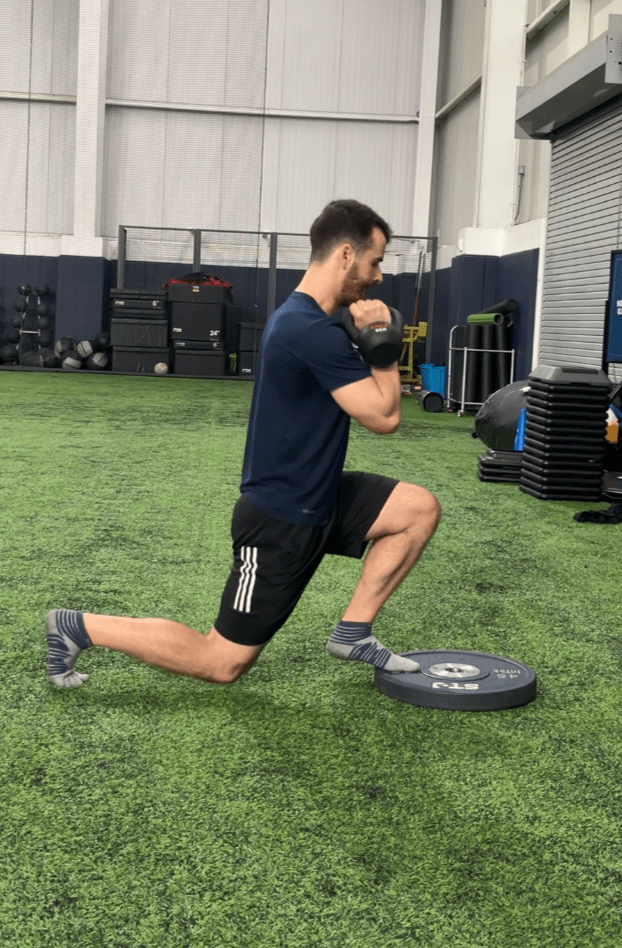
2. Warm-Up
Before you begin strength training barefoot then you should probably be doing your warm-up barefoot. I mentioned earlier that strength training barefoot allows you to practice creating a sturdy base. However, you need to prepare the tissue before you can teach the foot to work properly. That is why you should also include barefoot training into your warm-up. Prior to your session you should include soft tissue work for the arch and the calf. Then move into some mobility and activation drills that can be done barefoot. Finally, you can move onto your regular dynamic warm-up without your shoes on.
3. Post-Workout
If you have been on your feet for long periods wearing shoes then you have probably experinced stiffness. The whole body is connected like a chain. If we have a weakness in one spot then there will be an issue somewhere else. This could be in the hips, ankles, or somewhere else. One way to get rid of some of this stiffness is to take your shoes off and do some barefoot mobility drills. I use this drill to get rid of the stiffness in my feet and lower legs. Adding these drills a few times a weeks after a run or a long period in shoes will help the tissue get out of the stiff posistions they are forced into while wearing shoes.
4. Strides
McDougall mentioned in his book some of the biomechanical benefits of running barefoot. However, if you do to much barefoot running then you can increase your risk of inury. Barefoot strides allow you to sprinkle in some barefoot running to your week. This gives you the benefits of barefoot training while keeping the risk of injury low. Just rember to keep the focus of your strides on technique and to do it on terrain clear of debris.
How to Implement
I have just listed four ways that I include barefoot training in my weekly routine. Before you start to add in barefoot training you need to think about the risk-to-reward ratio. Barefoot training does have its rewards but you won’t be able to take advantage of these benefits if you are injured. That’s why you need to slowly start adding these into your program. I would start by adding barefoot training to your warm-up. During this time you will still need to focus on keeping even pressure across the foot. You will also include some movements to prepare the tissue in the lower leg. This would include soft tissue work on foot or some big toe mobility. After a few weeks of this then you can start to add some barefoot work during your cooldown. Don’t rush to increase your volume because it could increase your risk of injury. Once you start to feel more control through your feet then you can start to go barefoot for your strength training. Remember that you will start lighter with your weights. The focus will be on quality reps then the intensity will be progressed. Finally, once the muscles in your feet are feeling stronger you can start adding in some barefoot strides.
Conclusion
Like I said earlier, barefoot training has its risks and its rewards. If you want to take full advantage of it then you should take your time as you progress into it. You can go as slow as you want and you will still see some of the results. If you progress too quickly then you might end up experiencing an injury that will completely stop your barefoot training. So to get the most bang for your buck then start adding in barefoot training in moderation.
 Critical Sports Performance
Leave a comment